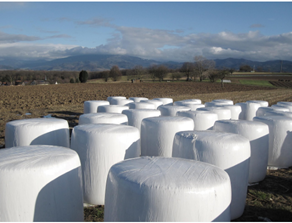
Silage Plastic’ Reusable Tarps vs. Single-Use Stretch Film
Heavy-gauge woven polyethylene tarps with replaceable oxygen-barrier underlays offer an alternative to applying new stretch film every year. For large Australian livestock stations, choosing silage plastic is not simply a matter of buying the lowest-priced roll. The real cost includes labour, replacement frequency, waste handling, storage, and the cover’s performance across multiple seasons. For broadacre operations producing large volumes of silage, comparing full-lifecycle costs can reveal where a reusable system may offer practical financial and environmental advantages.
Comparing the Two Silage Cover Systems
Traditional silage plastic is generally used for a single silage-making cycle. Stretch film is applied around bales or over specific silage systems and then removed and disposed of after use.
A reusable tarp system works differently. A heavy woven poly cover remains in service across multiple seasons, while the oxygen-barrier underlay can be replaced when its sealing performance or condition requires it.
For Australian stations, the choice depends on factors such as:
● Total silage volume produced each season
● Available labour for covering and uncovering
● Storage conditions between seasons
● Exposure to wind, sun and rough handling
● Local disposal and recycling arrangements
● Expected service life of the reusable tarp
Where Reusable Silage Pit Covers Australia ROI Comes From
The ROI calculation for the reusable silage pit covers Australia should extend beyond the purchase price. A reusable agricultural cover has a higher upfront cost, but you can spread that expense over several seasons if you handle and store the tarp properly.
The replaceable underlay also changes the economics. Instead of discarding the complete cover system each year, operators can retain the durable outer tarp while replacing the component that provides the oxygen barrier.
This can reduce the material purchased each silage season. However, actual savings depend on the cover’s service life, replacement underlay costs, labour and the farm’s operating conditions.
Consider the Total Cost of Ownership
When comparing systems, calculate:
● Initial cover and underlay purchase cost
● Expected number of seasons of tarp use
● Replacement underlay requirements
● Labour for installation and removal
● Cleaning and storage requirements
● Repairs and maintenance
● End-of-life disposal or recycling costs
This gives producers a more useful comparison than simply looking at the price per cover.
Carbon Footprint and Material Use
The environmental comparison also needs to consider how much new plastic is purchased over time. A single-use system requires new silage plastic for every application, creating a recurring material demand.
A reusable tarp can potentially reduce that recurring demand because the same outer cover remains in service. Only the oxygen-barrier layer may need replacement.
That does not automatically make a reusable system carbon-neutral or environmentally superior. Manufacturing, transport, cleaning, repairs, replacement components and eventual disposal all contribute to its footprint.
For Australian broadacre stations, the most meaningful comparison is therefore material use over the full operating period, rather than the footprint of one individual cover.
Choosing the Right System for a Broadacre Station
Reusable covers can make sense where silage production is substantial, and pits are used repeatedly. They are particularly worth evaluating when the operation has suitable facilities for careful removal, folding and storage.
Single-use silage plastic may remain practical where flexibility, simple handling or lower upfront expenditure is more important.
Before purchasing, ask suppliers about:
● Woven tarp weight and construction
● Expected service conditions
● Oxygen-barrier underlay specifications
● Repair options
● UV resistance
● Warranty coverage
● Recommended storage procedures
● Available recycling pathways
Conclusion
The financial case for reusable systems comes from spreading the cost of a durable outer tarp across multiple seasons while replacing only the necessary oxygen-barrier underlay. Single-use silage plastic offers straightforward seasonal application but creates recurring material and disposal requirements.
For large Australian livestock stations, compare both systems using whole-of-life costs, labour, material consumption, and storage requirements, not purchase price alone.
Speak with an agricultural plastics supplier about your annual silage volume, pit dimensions and expected operating period to calculate the most relevant reusable silage pit covers Australia ROI for your station.
—
FAQs
1. Are reusable silage tarps more expensive than single-use plastic?
They typically require a higher initial investment because the outer tarp is designed for repeated use. The comparison should include its expected service life and replacement underlay costs.
2. What is a reusable silage pit cover made from?
Reusable systems commonly use heavy-duty woven polyethylene or similar durable polymer materials, combined with an oxygen-barrier underlay.
3. Can the oxygen-barrier layer be replaced?
Yes, systems designed with replaceable underlays let you renew the barrier component without replacing the entire outer tarp.
4. Are reusable covers better for Australian conditions?
Their suitability depends on site conditions, including UV exposure, wind, handling practices and storage. A supplier should match the cover specification to the operating environment.
5. How should I calculate reusable silage pit covers Australia ROI?
Compare the initial tarp cost, replacement underlays, labour, repairs, storage and disposal against the recurring cost of purchasing and disposing of single-use silage plastic over the same number of seasons.





Comments are Disabled