Posts in Category: Technology
IT Companies in Adelaide South Australia: Driving Innovation and Excellence
Adelaide’s tech corridor has quietly emerged as a powerhouse of innovation in Australia. Home to globally recognised corporations, dynamic startups, and niche IT consultancies, the region’s top‑rated IT companies are shaping the future of software, cybersecurity, systems management, and infrastructure, driven by affordability, talent, and ambition.
Why Adelaide Is the Rising Epicentre for IT Services
 Positioned as Australia’s “20‑minute city,” Adelaide offers a unique combination of moderate living costs, proximity to emerging talent pools, and growing digital infrastructure. Recent investments, such as NextDC’s new $100 million data centre, underscore the city’s appeal to enterprise IT clients across sectors—from government and defence to mining and high-tech startups.
Prominent Corporate and Multinational IT Players
Zoho: A Cloud‑Software Pioneer with Local Roots
Zoho, a global leader in cloud-based business applications, chose Adelaide as the base for its Australian headquarters in 2024, aiming to hire approximately 50 staff to support CRM, HR, and finance operations in Australia. Notably, Zoho ranks among Adelaide’s top‑rated IT companies, blending global reach with local innovation.
SolveIT Software: Pioneering AI‑Driven Logistics
Founded in 2005, Adelaide-based SolveIT became a subsidiary of Schneider Electric, deploying supply chain optimisation and predictive analytics software worldwide. With strong integration in the mining and materials sector, it remains a standout among top-rated IT companies locally.
Cospective: Post‑Production Tech with Global Clout
Cospective, a spin‑off from Rising Sun Pictures, develops cineSync and Frankie—tools used by film and VFX studios globally. Located in Glenside, its products have earned industry awards and secured Adelaide’s place among the top-rated IT companies with international impact.
Rapidly Growing Local Specialists
Inter Intra, Commuserv & Cloud Networks Australia
These local MSPs consistently rank as top‑rated IT companies in managed services.
- Inter Intra, established in 2006, manages over 5,000 workstations nationwide and is recognised for its tailored enterprise IT solutions.
- Commuserv, with over 20 years of regional service, supports universities, law firms, medical practices, and retail clients.
- Cloud Networks Australia excels in 24/7 device-agnostic support and local data backup solutions.
These providers underpin Adelaide’s ICT resilience and help cement their status as top‑rated IT companies.
Cybersecurity: Rising to the Challenge
Australian Cyber Collaboration Centre (Aus3C)
Located in Lot Fourteen, Aus3C is the state’s keystone cybersecurity nonprofit. It collaborates with government bodies, universities, and global partners to reinforce digital defences and train emerging cybersecurity professionals. Aus3C’s work anchors Adelaide’s cybersecurity ecosystem and supports its top‑rated IT companies.
Chamonix and Blackbird IT
These specialist security consultancies, recognised by industry platforms like CloudTango, deliver advanced threat monitoring, compliance, and digital defence solutions, further solidifying Adelaide’s position in the national IT hierarchy.
High‑Growth Consultancies and Startups
Comunet & Data#3: Building IT Backbone
Comunet, operating since 1995, has earned a reputation for infrastructure strategy, disaster recovery, and mobile-device management solutions—essential capabilities for any top-rated IT company. Additionally, Data#3 provides enterprise-grade consulting and procurement services.
Lot Fourteen & ICC: Innovation Hotbeds
Adelaide’s visionary precincts—Lot Fourteen and the Innovation Collaboration Centre—foster startups like PRAETORIAN Aeronautics, Cropify, Outhire, and Amplified Intelligence, spawning diverse tech ventures that enrich the city’s top-rated IT companies ecosystem.
Consolidation & Mergers: Growing Ecosystem Strength
2024 saw EFEX acquire Adelaide-based Aish IT (established in 1989) to enhance its cybersecurity and managed services offerings across Australia. Similarly, Synechron’s acquisition of Chamonix IT deepened its expertise in digital transformation and blockchain-enabled IT consulting. These strategic moves reflect market confidence in Adelaide’s top‑rated IT companies.
Selecting the Right Top‑Rated IT Company for Your Needs
- Managed IT: Consider Inter Intra, Commuserv, or Cloud Networks for reliable end-to-end support.
- Consulting & Infrastructure: Opt for Comunet or Data#3 for strategic IT roadmap execution.
- Security Services: Chamonix, Blackbird IT, and e3C-related initiatives offer cutting‑edge protection.
- Specialist Tech: Seek out SolveIT, Cospective, and Zoho for supply‑chain, film‑tech, and cloud‑software needs.
Conclusion:
Adelaide continues to outperform expectations in the national ICT landscape. By nurturing top-rated IT companies, supporting co-innovation hubs, and expanding its infrastructure, the city offers enterprise-grade services, local partnerships, and cost-effective solutions. Whether you’re a startup, SME, or large institution, there’s a confident, competent IT partner ready to help you thrive in the digital era.
With its robust ecosystem and strategic investments, Adelaide is well-positioned to become Australia’s next central tech hub.
Siemens Controllers: What Businesses Need to Know for Smart Investment in Industrial Automation
In the era of smart factories and digitised industrial operations, the right automation technology can be the difference between stagnation and competitive growth. In New Zealand’s rapidly evolving industrial landscape, Siemens controllers have become a focal point for decision-makers striving to optimise productivity and future-proof their operations. While Siemens controllers cost is a significant consideration, understanding their actual value, applications, and long-term ROI can guide businesses toward smarter investment decisions.
Why Siemens Controllers Are at the Core of Modern Automation
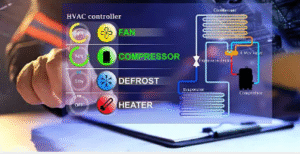 At the heart of many industrial automation systems lie programmable logic controllers (PLCs) and distributed control systems (DCS) – technologies that Siemens has mastered and refined for decades. Siemens controllers, including models such as the SIMATIC S7-1200, S7-1500, and ET 200 series, are renowned for their reliability, scalability, and seamless integration with Industry 4.0 environments.
In New Zealand’s industrial sectors, ranging from food processing and water treatment to manufacturing and logistics, these controllers play a pivotal role in ensuring system precision, uptime, and operational intelligence. However, to assess the cost of Siemens controllers meaningfully, one must look beyond the upfront price tag and consider how the technology aligns with specific business goals.
Breaking Down Siemens Controllers’ Cost in New Zealand
When evaluating the cost of Siemens controllers in New Zealand, it’s crucial to distinguish between the initial purchase price and the total cost of ownership (TCO). Prices for Siemens PLCs can vary significantly depending on the controller family, processing capabilities, I/O requirements, and the type of communication interfaces.
- Entry-level options (e.g., SIMATIC S7-1200) typically range from around NZD $600 to $1,200, depending on the configuration.
- Mid-range controllers, such as the S7-1500, can range from NZD $1,500 to $5,000 or more, especially when equipped with extended features or modular expansions.
- Advanced and redundant systems (e.g., S7-400H) or those designed for high-availability scenarios can exceed NZD $10,000.
Additional costs may include Human Machine Interfaces (HMIs), communication modules (e.g., PROFIBUS, PROFINET), software licenses for TIA Portal, and ongoing maintenance or service agreements.
Key Factors That Influence Siemens Controllers’ Cost
Understanding the cost structure involves dissecting a few key variables:
Project Complexity
The more complex the automation requirement (e.g., real-time control, multiple device integration), the more advanced the controller needs to be, raising the base cost.
System Scalability and Redundancy
Businesses requiring high system uptime or future expandability should factor in redundant systems and modularity, both of which may raise initial investment but reduce risk and downtime over time.
Engineering and Integration Services
The cost of the Siemens controller isn’t limited to hardware. Local integration, programming, and commissioning services—often provided by automation partners in New Zealand—can significantly affect the total project cost.
Compliance and Certification
Industries such as food and pharmaceuticals often require certified solutions. Controllers used in these contexts may come with added compliance-related features, which can impact the price.
Siemens Controllers and the Value of Digitalisation
One reason Siemens’ controller costs should be viewed through a value lens is the unmatched integration with digital platforms. Siemens’ TIA (Totally Integrated Automation) ecosystem offers seamless connectivity between hardware, software, and cloud solutions. This integration reduces engineering time, increases transparency, and enables predictive maintenance, turning a hardware investment into a long-term digital asset.
For New Zealand businesses striving to remain competitive amidst rising labour and energy costs, the ability to make data-driven decisions and adapt quickly to market changes is invaluable.
Conclusion:
While it’s easy to compare controllers based on price tags, a strategic approach is to assess how Siemens controllers support your long-term operational goals. In New Zealand’s competitive industrial market, cost-effectiveness stems from selecting the right solution for your application, rather than simply opting for the cheapest option available.
Understanding the full scope of Siemens controllers’ cost means evaluating upfront investment, operational efficiency, system longevity, and adaptability to future needs. Businesses that take the time to evaluate these dimensions position themselves for more intelligent automation, greater productivity, and long-term cost savings.
For decision-makers ready to invest in intelligent automation, Siemens controllers offer a proven, scalable, and future-ready solution that delivers far more than just control—it delivers confidence.